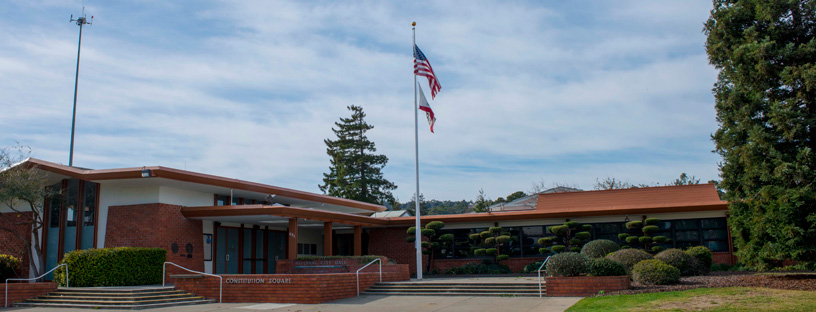
Bay Area Images

Air Quality Fact

We have a lot to celebrate. Bay Area air is substantially cleaner than it was fifty years ago. 2004 was our cleanest year on record. We met federal standards for ground level ozone every day, and today, the Bay Area has the cleanest air of all of California ’s major urban areas.

Give Us Your Feedback


select


(500 character limit)
 

I would like a response.
(Allow 5-7 business days)


Utility Buttons

  • Email This Page
  • Print
  •  Save & Share Share

BAAQMD Webcasts

Recent Webcasts

5/15/2013 Board of Directors Special Budget Hearing
5/15/2013 Board of Directors Regular Meeting
More Information:
Budget Agenda
(70 kb PDF, 9 pgs)
Board Agenda 
(1 mb PDF, 211 pgs)

5/8/13 Advisory Council Meeting
More Information:
Agenda 
(83 Mb PDF, 9 pgs)
More Agendas & Minutes

Board Archives:

Agendas, Minutes and Media

HelpWebcast Support
System & player requirements, RSS feeds & mobile alternatives.

BAAQMD on iTunes

iTunes Audio Podcasts
iTunes Video Podcasts

Contacts

Groups

Communications and Outreach

(415) 749-4900


Full BAAQMD Directory

2000 - 2005

The Air District addresses regional and community concerns over fine particle pollution and diesel exhaust.  The CARE Program is initiated.

The Air District Expands its Vision

The first five years of the 21st century will forever be marked by the tragedy of September 11, 2001, and the ensuing wars in Afghanistan and Iraq. It may also be remembered as an era that demonstrated how much air quality and energy use are interconnected with broader national policy issues.

In the Bay Area, with great progress having been made in improving general air quality conditions, the Air District stepped up its outreach to local communities in the region. And with ozone concentrations a fraction of what they were several decades earlier, the Air District increased its efforts to address the substantial public health problems presented by particulate pollution.

Port of Oakland

In 2004, the Air District's Executive Officer Jack Broadbent kicked off a demonstration project with the Port of Oakland to test the air quality benefits of emulsified diesel fuel in a truck fleet.

In the early years of the century, the new federal PM2.5 standard went into effect for fine particulates, or particulate matter 2.5 microns or smaller in size. Implementation of this standard was accompanied by studies linking fine particulates to a range of health effects from cardiopulmonary disease to premature death. PM from diesel exhaust has been estimated to account for up to 70 percent of the cancer risk from toxic air pollution throughout the Bay Area.

During this period the Air District began monitoring and forecasting for PM2.5, as well as introducing a dioxin monitoring network measuring levels of that highly toxic pollutant.

In response to local concerns, the Air District entered into a partnership to reduce diesel particulate emissions at the Port of Oakland, passing a truck idling regulation, and participating in a clean, emulsified diesel-fuel pilot program with a truck fleet serving the Port.

The California energy crisis of 2001 also demonstrated the need to address smaller, back-up diesel generators. The Air District amended its rules to regulate and bring these back-up generators into the permit system.

clear day

The summer of 2004 was the cleanest on record, in terms of ozone emissions. There were no exceedances of either the federal one-hour or eight-hour ozone standard, and only seven exceedances of the state standard.

During this period, new research showed refinery flares to be an underestimated source of emissions. The Air District accordingly amended Regulation 12 to require monitoring of flare emissions, and began work on a new flare regulation.

The Wood Smoke Rebate program began with funding from a local utility used to reduce particulate emissions in Santa Clara County from wood-burning fireplaces and old wood stoves.

During this period, the Air District held a variety of informational meetings in local communities, and the Air District's Executive Officer, senior staff, and Board of Directors participated in several community tours to hear local residents speak about issues affecting their neighborhoods.

Spare the Air train

As part of the summer 2004 Spare the Air campaign, seven BART cars traveling on the Pittsburg/Bay Point and Dublin/Pleasanton lines were covered in an eye-catching wrap. That summer, for the first time ever, in partnership with the Air District and the Metropolitan Transportation Commission, BART offered free morning commute rides on two Spare the Air weekdays.

Finally, in 2004, the Air District embarked on the groundbreaking Community Air Risk Evaluation (CARE) program. This program, projected to last several years, will involve an unprecedented degree of coordination among stakeholders and staff with expertise in air monitoring, modeling, and analysis working together to better understand the impacts of toxic pollutants at local levels. The final objective will be to create a two-kilometer gridded diesel and toxics emissions inventory of the entire Bay Area. This information can be used to focus resources on reducing toxic exposure in the most impacted of the Bay Area's communities.

As the Air District celebrates its 50th anniversary, the CARE Program is just one of a series of innovative projects that will be undertaken in the years ahead, as the agency expands its scope to address new challenges, from indoor air pollution to global warming. The last half century has seen dramatic improvement in the Bay Area's air quality, and the Air District expects to build on this success as it prepares to make bold new gains in the next 50 years to come.

2000

The Central California Ozone Study (CCOS) begins. The Air District participates with several other air agencies in this study designed to enhance understanding of the formation and complex, cross-district transport patterns of ozone in the extensive northern and central parts of California.

The Air District joins with other Bay Area agencies and business, environmental, and social equity groups to promote "smart growth" and create more livable communities. The first of an ongoing series of public Smart Growth Workshops is held.

2001

The Air District rolls out its Lower-Emission School Bus Program to administer state-funded grants to school districts for the replacement and retrofitting of school buses with older diesel engines.

The California Air Resources Board approves the Air District's 2001 Ozone Attainment Plan, designed to bring the Bay Area closer to attainment of state ozone standards.

The Air District amends Regulation 2 and Regulation 9 to regulate and permit small emergency standby diesel generators.

The Air District and the California Air Resources Board, in cooperation with EPA, establish an ambient air monitoring network for dioxins.

2002

The Air District begins to make daily air quality forecasts for PM2.5.

The Air District updates its open burning regulation, Regulation 5, to further reduce the negative public health impact of open burning smoke and to prevent emissions from causing excesses of air quality standards.

2003

The Air District adopts a flare monitoring regulation for refineries, Regulation 12, Rule 11, requiring refineries to monitor the volume and composition of gases burned in refinery flares, to calculate flare emissions based on this data, and to report the information to the Air District. This is the most stringent flare monitoring rule in the country.

The Air District's Board of Directors names Jack Broadbent as Executive Officer. Broadbent comes to the District with an extensive air quality background at the federal and local level.

The Air District's pilot Wood Smoke Rebate Program offers rebates to Santa Clara County residents for replacing wood-burning stoves and fireplaces with gas-burning appliances. This program is one of the first of its kind, with funding resulting from an agreement between the Air District and the California Energy Commission with Calpine Corporation and Silicon Valley Power.

2004

The Air District sponsors the first of several planned "Community Environmental Tours" of neighborhoods affected by air pollution. Air District Board members, the Executive Officer, and staff join community residents and environmentalists to listen to resident concerns.

The Air District embarks on an ambitious Community Air Risk Evaluation (CARE) Program to provide a better understanding of the cumulative impact of toxic air pollutants on smaller communities throughout the Bay Area.

The Air District partners with the Port of Oakland to undertake the Emulsified Fuel Pilot Program, testing a cleaner blend of diesel fuel on a truck fleet hauling shipping containers to and from the Port's terminals.

For the first time, in partnership with the Air District and the Metropolitan Transportation Commission (MTC), BART offers free morning commute rides on a select number of Spare the Air weekdays.

2004 ends as the cleanest year on record for air quality in the Bay Area, with no exceedances of the federal one-hour or eight-hour ozone standards, and only seven exceedances of the more stringent state standard.

Last Updated: 11/28/2012