|
|

|
|
|
|
November 2025 l Volume 2025-4
|
|
|
|
|
|
|
In this issue, you’ll find articles about the Air District’s adoption of new amendments to its wood burning and open burn regulations, the release of a community plan to reduce emissions in East Oakland and an accompanying workshop, and Air District grant funding for electric school buses and charging infrastructure. Other articles cover grants awarded to SamTrans for bus-charging infrastructure in San Carlos, a penalty settlement with Tesoro that includes enhanced air monitoring and transparency requirements, the administering of grant award for the second cycle of the James Cary Smith Community Grant Program, and fines levied against Chemtrade West and Marathon Martinez Refinery for air quality violations. Current grant opportunities are also summarized.
|
|
|
|
|
|
|
|
|
|
|
|
Air District Board Adopts Wood-Burning and Prescribed Burning Rule Amendments to Protect Public Health and Reduce Wildfire Risk
|
|
| | |
|
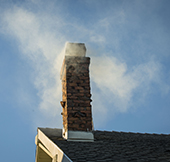
On October 1, the Air District’s Board of Directors approved amendments to Regulation 6, Rule 3: Wood-Burning Devices and Regulation 5: Open Burning that will provide stronger public health protections and support wildfire prevention efforts through improved use of prescribed burns across the region. Under the updated Wood-Burning Devices Rule, the Air District will lower the threshold for issuing Spare the Air Alerts for fine particulate matter from a daily forecast value of 35 to 25 micrograms per cubic meter to protect Bay Area residents from harmful wood smoke at even lower concentrations. A more stringent, health-protective standard means alerts will be called more frequently, an estimated 19 to 41 alerts per year, compared to the historic average of 15.
The Open Burning Rule was also amended to waive prescribed burn fees for all land managers, including nonprofits and private landowners. This expands the current exemption that only applies to public agencies, removing a financial barrier to using prescribed fire as a safe and effective tool for reducing wildfire fuels.
Together, these amendments are set to take effect immediately and will:
- Reduce harmful wood smoke exposure and buildup through more health-protective standards.
- Support the improved use of prescribed burning to cut wildfire fuel loads and lower the risk of severe fires.
- Advance state and regional goals for clean air and climate resilience.
It is illegal for Bay Area residents and businesses to use their fireplaces, wood stoves, pellet stoves, outdoor fire pits or any other wood-burning devices during a Spare the Air Alert for fine particulate pollution. Exemptions are available for homes without permanently installed heating, where wood stoves or fireplaces are the only source of heat. Anyone whose sole source of heat is a wood-burning device must use an EPA-certified or pellet-fueled device that is registered with the Air District to qualify for an exemption. An open-hearth fireplace does not qualify for an exemption.
Like cigarette smoke, wood smoke contains carcinogenic substances such as benzene and polycyclic aromatic hydrocarbons. It also contains high levels of extremely harmful fine particulate matter. Exposure to wood smoke has been linked to serious respiratory illnesses and increased risk of heart attacks. The fine particulate pollution in wood smoke is especially harmful for children, the elderly and those with respiratory conditions. Air District modeling indicates that 94 to 210 premature deaths per year are attributable to fine particulate matter pollution from residential wood burning in the Bay Area.
|
|
|
|
|
|
|
|
|
|
|
|
Air District Releases Draft Community Emissions Reduction Plan and Hosts Open House
|
|
| | |
|
The Air District is releasing the Draft East Oakland Community Emissions Reduction Plan for public review on November 3. The draft CERP represents more than two years of partnership with Communities for a Better Environment and engagement with the East Oakland Community Steering Committee and community partners to shape strategies and actions aimed at improving local air quality, protecting public health, and advancing environmental justice in East Oakland.
The draft plan will be posted on the East Oakland AB 617 CERP web page, and will be available in Spanish and Chinese. The East Oakland CERP web page has information about the development process and past community steering committee meetings and activities that have helped shape the draft plan.
The Air District is also hosting a Public Open House for the public to learn more, ask questions, and find out how to comment on the draft plan. This event will be held on Thursday, November 13, from 6 - 8 PM, at Youth UpRising, located at 8711 MacArthur Blvd in Oakland.
|
|
|
|
|
|
|
|
|
|
|
|
Air District Provides Funding for Electric School Buses and Infrastructure
|
|
| | |
|
This fall the Air District provided grant funding for electric school buses and related charging infrastructure to be deployed in San Ramon Valley and Santa Clara County. San Ramon Valley Unified School District
In September, the Air District awarded a $1.18 million grant to the San Ramon Valley Unified School District to replace seven older school buses, five compressed natural gas buses and two diesel buses with zero-emission electric buses and the charging infrastructure to support them. The project will also support the installation of eight DC fast chargers and related infrastructure.
Funding for this project comes from the California Air Resources Board’s Carl Moyer Program, which provides financial incentives to replace or upgrade heavy-duty vehicles and equipment to reduce harmful emissions, and is administered locally by the Air District.
SAFETRANS Transportation Inc.
In October, the Air District announced $4,822,770 in funding to SAFETRANS Transportation Inc. to deploy electric school buses serving special education students across Santa Clara County. The grant will support the purchase of 14 zero-emission buses and 11 charging stations, helping to electrify transportation services for some of the region's most vulnerable students.
SAFETRANS Transportation Inc., which has secured multiple contracts to provide special education transportation services across 10 school districts and two businesses throughout Santa Clara County, applied for Air District funding to ensure clean, healthy transportation for the students it serves. The new electric buses will replace older diesel vehicles, reducing harmful air pollution and greenhouse gas emissions while providing quieter, more comfortable rides for special education students who often spend significant time traveling to and from school.
The Air District's funding program prioritizes projects that reduce emissions in communities most impacted by air pollution. Special education transportation services often operate in residential neighborhoods and school zones where reducing diesel emissions provides immediate health benefits to children and families.
Children are especially vulnerable to the health effects of air pollution, which can trigger asthma, respiratory illness and other long-term health problems. By replacing older diesel and natural gas buses with zero-emission models, schools can reduce greenhouse gas emissions, lower exposure to harmful pollutants, and provide a quieter, cleaner ride that supports both student health and climate goals.
|
|
|
|
|
|
|
|
|
|
|
|
Air District Awards $13.3 Million to SamTrans Toward the Installation of New Zero-Emission Bus-Charging Infrastructure
|
|
| | |
|
In August, the Air District announced the award of a $13.3 million grant to the San Mateo County Transit District, to be used toward the installation of new high-capacity electric bus-charging infrastructure at its San Carlos facility. This SamTrans project will help accelerate the transition of the SamTrans bus fleet to zero-emission technology and improve air quality in communities most affected by air pollution. The funding for the project comes from the California Air Resources Board’s Carl Moyer Program, which provides financial incentives to replace or upgrade heavy-duty vehicles and equipment to reduce harmful emissions. The Air District administers the program locally.
The SamTrans project will include the purchase and installation of 37 overhead pantograph chargers capable of delivering a combined 1.7 megawatts of power to the agency’s growing electric bus fleet. The chargers will be located at the SamTrans South Base bus yard in San Carlos, serving routes that benefit disadvantaged and low-income communities throughout San Mateo County.
The project is expected to be completed by October 2027 and will directly reduce emissions of nitrogen oxides, particulate matter and other pollutants linked to asthma, heart disease and other serious health impacts.
The Carl Moyer Program is a voluntary grant program that has funded more than $1 billion in projects statewide since 1998, removing thousands of tons of harmful emissions from California’s air.
|
|
|
|
|
|
|
|
|
|
|
|
Air District and Tesoro Reach $75,000 Settlement with Enhanced Requirements for Air Monitoring and Transparency
|
|
| | |
|
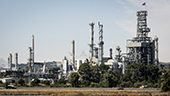
In August, the Air District reached a settlement with Tesoro Refining & Marketing Company that will significantly enhance air monitoring data transparency, providing more information about air pollutants around its refinery in unincorporated Contra Costa County, near Martinez. The agreement requires Tesoro to take new data access and community engagement actions beyond those required by regulation or permit. The Air District’s Refining Emissions Tracking Rule (Regulation 12, Rule 15) requires Bay Area refineries to operate fenceline air monitoring systems that measure pollutant concentrations near their property lines. In October 2023, the Air District disapproved the Fenceline Air Monitoring Plans of all five Bay Area refineries because the plans did not meet the requirements of the rule.
Following disapproval of the plans, the Air District has worked with each of the refineries to meet all requirements and bring them back into compliance. Tesoro is the second among the Bay Area refineries to resolve disapproval of its fenceline air monitoring plan. The Air District will continue to work with the other refineries to resolve their air monitoring plan noncompliance and bring them into compliance.
The agreement requires Tesoro to implement the approved Fenceline Air Monitoring Plan and make additional improvements to monitoring in the near future. This includes:
- Operating a network of six point monitors for hydrogen sulfide
- Complying with clearer requirements for operating, maintaining, and assessing the performance of the monitoring equipment for all pollutants to improve accountability and transparency
- Providing public access to real-time and historical data that can be easily downloaded
- Providing quarterly reports summarizing measured pollutant concentrations and detailing the results of quality assurance and quality control checks
- Holding a public meeting in 2025 to solicit feedback and respond to comments from local residents on improvements to the availability and visualization of data from Tesoro’s fenceline and other air monitoring systems
- Paying the Air District a penalty of $75,000, with additional penalties to ensure immediate accountability if Tesoro violates any settlement terms
The Air District will coordinate closely with Tesoro to ensure all settlement obligations are implemented while continuing to engage with the local community to ensure residents have clear, timely information.
The Air District continually improves its emissions and air quality measurement programs as technology and air quality data needs evolve, particularly for communities disproportionately impacted by air pollution.
|
|
|
|
|
|
|
|
|
|
|
|
Air District Awards $3.5 Million in Second Cycle of James Cary Smith Community Grant Program
|
|
| | |
|
The Air District has selected grantees for Cycle 2 of the James Cary Smith Community Grant Program, awarding $3.5 million to 12 community-based and nonprofit organizations across the region. Each organization will receive up to $300,000 over a three-year period. The program supports local leaders in their efforts to implement strategies that build community capacity to improve air quality and advance public health in neighborhoods disproportionately burdened by air pollution.
Grantees will implement a wide range of capacity-building approaches — from multilingual air quality ambassador initiatives to a project-based learning program for diverse high school students. Examples of projects currently in progress include Breathe California of the Bay Area’s training for emerging leaders in environmental justice communities and Climate Action Pathways for Schools’ support for high school students to execute decarbonization and sustainability projects. The Air District prioritized funding for projects that benefit environmental justice communities and support long-term, community-driven solutions to local air quality challenges.
The refocused grant program launched in 2022 to strengthen the Air District’s partnerships with communities most affected by air pollution. Cycle 1 of the program awarded $6.4 million to 33 organizations over three years.
|
|
|
|
|
|
|
|
|
|
|
|
Air District Fines Chemtrade West US LLC and Marathon Martinez Refinery for Air Quality Violations
|
|
| | |
|
This fall, the Air District took penalty action against Chemtrade West US LLC and Marathon Martinez Refinery for air quality violations that occurred at their Bay Area facilities. Chemtrade
In September, the Air District fined Chemtrade West US LLC $160,000 for air quality violations at its sulfuric acid manufacturing plant in Richmond, which is connected to the Chevron Richmond refinery. Chemtrade supplies various chemical products to industry, including sulfuric acid, which is a byproduct of refining crude oil.
This penalty addressed violations that occurred between 2013 and 2023. The violations included:
- Failure to monitor and record pressure across its venturi scrubber, an emergency abatement device
- Failure to abate internal combustion engine emissions
- Late reporting of violations
All violations have been corrected.
Marathon
In October, the Air District fined Marathon Martinez Refinery, which is operated by Marathon subsidiary Tesoro Refining & Marketing Company LLC, $372,500 for 13 Notice of Violations that include tank-related violations, uncertified pieces of equipment at their on-site gas-dispensing facility and reporting delays.
By addressing these violations, Marathon Martinez Refinery will minimize excess emissions in the future. This penalty also incentivizes Marathon Martinez Refinery to increase attention to inspection and maintenance at its facility in unincorporated Contra Costa County, near Martinez.
All violations have been corrected.
The Air District issues Notices of Violation when a facility violates a specific air quality regulation or rule. Violators are required to correct the problem and pay a monetary penalty based on the seriousness of the violation. Corrective actions may include shutting down certain operations or modifying operations or equipment to achieve compliance.
A portion of the collected penalty funds will be used in the community that is impacted by the violation. These funds will support local projects aimed at reducing pollution and improving public health.
|
|
|
|
|
|
|
|
|
|
|
|
Air District Offers Millions in Grants
|
|
| | |
|
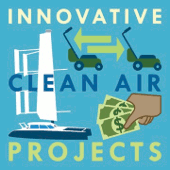
The Air District administers a number of grant funding programs that offer incentives for clean air projects. Grant Funding for Clean Air Projects
Grant programs for Bay Area businesses and public agencies:
The Climate Tech Finance Loan Guarantee Program is available to support the development and purchase of climate technologies for small businesses in California. Climate entrepreneurs can apply for loan guarantees up to 80 percent of the loan principal or $5 million, whichever is less, to accelerate the growth and impact of their businesses. This program is open and accepting applications. https://ctf.baaqmd.gov/ We invite you to take a short survey to help us assess the program’s effectiveness and gather feedback to improve how we support climate innovation.👉 Climate Tech Finance Needs Survey
The Charge! Program for electric vehicle (EV) charging projects is not currently accepting applications. Charge! is a grant program that helps offset the cost of purchasing and installing new chargers for light-duty EVs, including publicly available chargers at qualifying facilities and private chargers to serve multi-family housing and case-by-case workplace locations within the Air District’s jurisdiction. Visit the Charge! Program website for more information. www.baaqmd.gov/charge
Coming soon! A new voucher-based Commercial Lawn and Garden Equipment Electrification Program is being piloted in 2025 for commercial operators. This program aims to reduce the cost of switching to zero-emission lawn and garden equipment. To learn about this program and to sign up to receive email notifications with program updates visit https://www.baaqmd.gov/en/funding-and-incentives/public-agencies/lawn-and-garden.
Visit our website to learn more about our programs and to sign up for email alerts: Apply for Funding
Grant programs available to Bay Area residents:
- The Vehicle Buy-Back program pays Bay Area residents a cash award to retire an older light-duty vehicle (i.e., passenger car or light-duty truck). As of July 1, 2025, the incentive for retiring an older passenger car and light-duty truck is $2,000 per vehicle. The program accepts operable, registered, model year 2000 and older passenger cars or light-duty trucks for scrapping, removing the highest-polluting passenger vehicles from the road. www.baaqmd.gov/vbb
- The Clean Cars for All Program provides grants to income-qualified Bay Area residents to retire an older (model year 2007 or older) passenger vehicle and replace it with a new or used plug-in hybrid, fuel-cell, or electric vehicle. The program is open to all Bay Area zip codes and provides grant amounts up to $12,000.Participants who purchase a qualifying vehicle may also be eligible for up to $5,000 towards adaptive equipment for accessibility needs. Residents that do not want to purchase a replacement vehicle can receive $7,500 towards alternative mobility options (e.g. public transit or electric bicycles). New applications are being accepted now! - Apply today at: www.baaqmd.gov/cleancarsforall
Other state-wide grant programs funded by Volkswagen NOx Mitigation Trust:
- The VW Combustion Freight and Marine Program offers grants to equipment owners to accelerate the replacement of older, higher polluting diesel engines with the cleanest available technologies. Equipment eligible for replacement includes Class 7 and 8 freight trucks (including waste haulers, dump trucks, and concrete mixers) or their engines (2012 model year and older) that are compliant with current regulations; freight switcher locomotives or their engines; and ferry, tugboat, and towboat engines (pre-Tier 3). This solicitation is open and accepting applications on a first-come, first-served basis until all funds are fully allocated. This program is administered by the South Coast Air Quality Management District.
https://xappprod.aqmd.gov/vw/combustion.html
- The VW Zero-Emission Class 8 Freight and Port Drayage Trucks Program offers grant funding for equipment owners and aims to accelerate electrification of Class 8 freight trucks, including drayage trucks, waste haulers, dump trucks, and concrete mixers or their engines. Eligible trucks must be 2012 model year and older. This solicitation is open and accepting applications on a first-come, first-served basis until all funds are fully allocated. This program is administered by the South Coast Air Quality Management District.
https://xappprod.aqmd.gov/vw/zero-emission.html
- The VW Zero-Emission Transit and Shuttle Buses Program offers grant funding to bus fleet owners that operate in California to support early adoption of zero-emission bus technologies that will reduce harmful exposure for the state’s most sensitive populations. This solicitation is open and accepting applications for transit and shuttle buses on a first-come, first-served basis until all funds are fully allocated. This program is administered by the San Joaquin Valley Air Pollution Control District.
http://vwbusmoney.valleyair.org/
- The VW Zero-Emission Freight and Marine Program offers funding for projects in California that repower ferries, tugboats, and towboats, or that replace heavy-lift forklifts or cargo handling equipment with zero-emission alternatives. This solicitation is open and accepting applications for the replacement of heavy-lift forklifts and port cargo handling equipment on a first-come, first-served basis until all funds are fully allocated. This program is administered by the Bay Area Air District. Sign up to receive program email alerts at https://www.surveymonkey.com/r/CaliforniaVW.
|
|
|
|
|
|
|
|
|
|
|
Air District Events
|
|
This winter, the Air District and Spare the Air will be participating in the following outreach event.
December
Christmas in the Park – San Jose
December 6-7
|
|
|
|
|
|
|
|
|
|
|