

Prescribed Burning and Air Quality
Learn about prescribed burns, why they matter, and their impact on air quality.
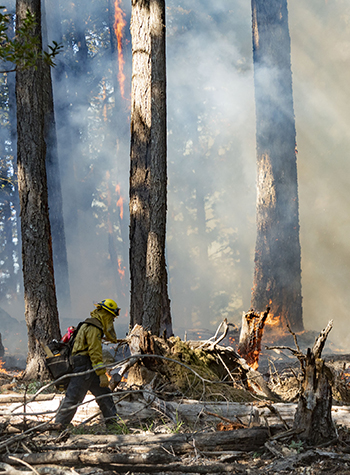
Prescribed burning is the use of planned, controlled, low intensity fires by trained professionals to reduce vegetation and fuels that can contribute to wildfires. With close coordination between the Air District, land managers, and fire agencies, prescribed burns are allowed under specific conditions to limit smoke impacts on nearby communities while allowing this important wildfire-prevention work to move forward. However, prescribed burns do produce smoke and can temporarily affect air quality in nearby communities. These impacts cannot always be fully eliminated, and weather and air quality conditions can sometimes change unexpectedly once a burn is underway.
Why Prescribed Burning Matters
Vegetation and other fuels accumulate over time across the Bay Area’s wildlands. In addition, warmer temperatures and more frequent drought in recent decades due to climate change have made the accumulated fuel more susceptible to wildfires. These factors have contributed to longer wildfire seasons and the potential for larger and more intense wildfires with widespread smoke impacts.
Prescribed burning is one tool that land managers and fire agencies use to address this risk. Specifically, prescribed burns help to:
- Produce less smoke overall: When timed carefully to minimize air quality impacts near the ground, prescribed burns are an effective tool that can help reduce the risk of large, catastrophic wildfires, which have much greater impacts on air quality.
- Reduce hazardous fuels: Prescribed burning removes grasses, brush, fallen branches, and other vegetation that can fuel a wildfire, and is often used alongside other fuel-reduction methods like thinning, mowing, grazing, and chipping.
- Lower wildfire severity: Reducing available fuel can slow the progress of wildfires, decrease fire intensity, and provide firefighters safer and more effective opportunities to respond.
- Restore healthy ecosystems: Many California landscapes have evolved with recurring fire. According to traditional ecological knowledge and modern scientific practices, carefully managed fires can recycle nutrients, support native plants, and promote healthy ecological processes.
- Protect communities: Treating fuels near neighborhoods, roads, and evacuation routes reduces risk to lives and property.
Who is Involved in Prescribed Burning?
Several agencies coordinate closely before, during, and after a prescribed burn, and each agency has different responsibilities and authority:
- Air District: reviews smoke management plans, evaluates weather and air quality conditions, determines daily burn status and authorization, and shares information with the public about planned fires and potential impacts from smoke.
- CAL FIRE and local fire agencies: evaluate fire safety, issue applicable permits, and oversee operational safety requirements.
- Land manager or burn operator: plans and conducts the burn, monitors onsite conditions and smoke, and follows the approved plan and permit.
Smoke and Air Quality
To minimize smoke impacts in populated areas, the Air District considers weather, air quality, and fuel conditions, proximity to nearby communities, and other planned burns before authorizing a prescribed burn. However, there is no way to conduct a prescribed burn without smoke, and even under ideal conditions, smoke from an authorized burn may still temporarily affect nearby communities.
If smoke from a prescribed burn reaches you:
- Check current air quality conditions via the AirNow Fire and Smoke Map or the Air District’s Current Air Quality Conditions webpage.
- Limit or reschedule strenuous outdoor activity when air quality is unhealthy.
- At home, close windows and doors and run an air conditioner or air purifier if you have one.
- If driving, keep windows closed and set your vehicle’s ventilation system to recirculate.
- See the Air District’s websites on Prescribed Burning, Smoke, and Health and on Fire Safety for more information and resources.
If smoke from a prescribed burn seems excessive or is affecting you, you can report it to the Air District by submitting an air pollution complaint online or by calling 1-800-334-ODOR (1-800-334-6367).
Explore More About Prescribed Burns
- Current and Planned Prescribed Burns to learn where and when upcoming prescribed burns are expected
- How Prescribed Burns are Reviewed and Authorized to learn more about the Air District’s role in the prescribed burn process
- Prescribed Burning, Smoke, and Health to learn more about smoke from prescribed fires and actions to reduce your exposure
- Prescribed Burning FAQs to see answers to frequently asked questions about prescribed burns
- Fact sheet on Prescribed Burns and Air Quality

Last Updated: 2026/10/19