

Bay Area Images

Large Fueling Truck

Air District Fact

The BAAQMD's Carl Moyer Program provides grants primarily for installing new, cleaner engines or emission-control devices in heavy-duty equipment, such as trucks and buses, marine vessels, construction equipment, locomotives, and agricultural irrigation pumps.

Give Us Your Feedback


select


(500 character limit)
 

I would like a response.
(Allow 5-7 business days)


Utility Buttons

  • Email This Page
  • Print
  •  Save & Share Share

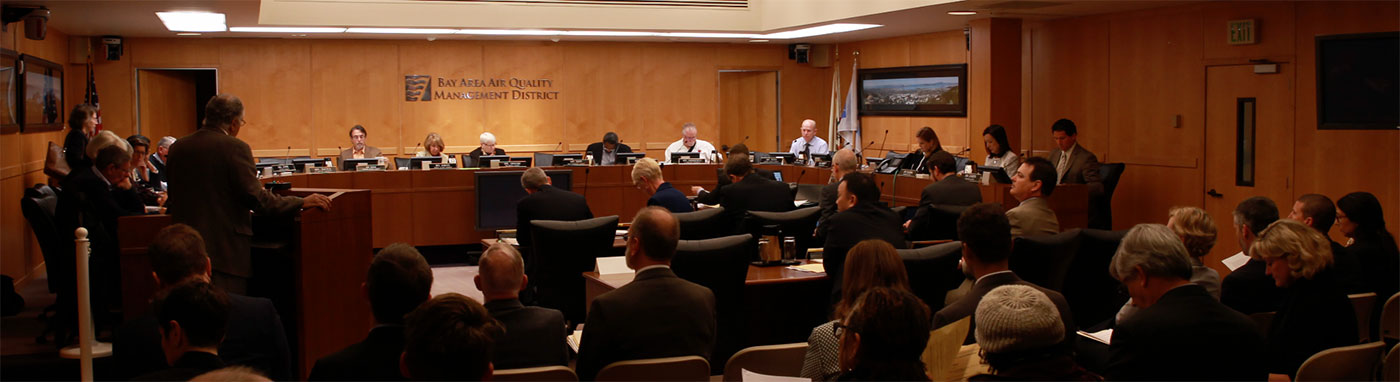
BAAQMD Webcasts

Upcoming Webcasts

Workshop on Proposed Amendments to Regulation 2: Permits to be Webcast live from 10:00am to 12:00pm on 2/22/2012.
More Information:
Workshop Notice
(521 k PDF, 5 pgs)
Rule Workshops

Recent Webcasts

The Particulate Matter Workshop is available as a Webcast archive.
Meeting Presentation:
Reducing Particulate Matter in the SF Bay Area
(4 MB PDF, 49 pgs)
More Information:
Particulate Matter Planning

12/14/2011 Board of Directors Special Meeting
More Information:
12/14/2011 Agenda
(545 k PDF, 23 pgs)
Board Archives:
Agendas, Minutes and Media

HelpWebcast Support
System & player requirements, RSS feeds & mobile alternatives.

BAAQMD on iTunes

iTunes Audio Podcasts
iTunes Video Podcasts

Tools & Methodology

The air quality analysis tools below are intended to assist lead agencies in analyzing air quality impacts from proposed land use projects and plans. Refer to the District's CEQA Guidelines for additional guidance on how to analyze and mitigate specific air quality impacts.

The District's CEQA community risk and hazards screening tools and tables are provided for lead agencies to consider in deciding whether there should be further environmental review of a project. The screening tables are intentionally conservative, such that if a project passes the initial screen, no additional review related to the impact is necessary. The screening tables are not intended to be used to assess actual risk for all projects. The screening tables are not intended to discourage infill development or affordable housing. If a project does not pass the initial screen, a more advanced screening analysis should be conducted. It is anticipated that most projects that do not pass the initial screen will pass the screen with more refined analysis. The screening tables will continue to be updated to reflect the best available data. To contact the District for additional guidance on the screening tables and to conduct a more advanced screening analysis, please use the Stationary Source Inquiry Form in the table below the flow chart.

The flowchart below (see the full size version) provides detailed steps on how to use the District's screening tables for estimating potential risk and hazard impacts:

UpdatedPollutantsTools and ResourcesDocuments
9/1/2011Risks & Hazards

This form is required when users request stationary source data from BAAQMD for environmental review purposes.

SSIF Instructions_9_01_11(588 k XLSX)
5/3/2011Risk & Hazards

Screening Analysis Flow Chart - outlines step-by-step screening process for estimating risk and hazards impacts in projects

Screening Analysis Flow Chart_May 2011(425 k PDF, 2 pgs)
5/3/2011Risk & Hazards

Recommended Methods for Screening and Modeling Local Risks and Hazards - describes in detail  how to screen and model risk and hazards from stationary, highway, and roadway sources. Also discusses the assumptions and methodologies used in developing the stationary source, highway, and roadway screening tools.

BAAQMD Modeling Approach(2 Mb PDF, 94 pgs)
4/29/2011Risk & HazardsStationary Source Screening Analysis Tool - Google Earth map tool to identify stationary sources and associated estimated risk and hazard impacts.  Google Earth must be installed to use these files.  Please contact District staff when using the Stationary Source Inquiry Form posted above if additional data on stationary sources are needed.  Estimated risk and hazard impacts marked with an asterisk are based on Health Risk Screening Assessments conducted by the District for this particular source, and represent the most site specific data available.  The remaining stationary source risk and hazard impacts data not asterisked were derived using more conservative modeling parameters and assumptions.  The estimated risk and hazard impacts from these remaining sources would be expected to be substantially lower when more site specific Health Risk Screening Assessments are conducted.Alameda May 2011(2 Mb KML)
Contra Costa May 2011(1 Mb KML)
Marin Sonoma May 2011(1 Mb KML)
Napa Solano May 2011(844 k KML)
San Mateo May 2011(1 Mb KML)
San Francisco SFO October 2011(60 k KMZ)
Santa Clara Stationary Sources 2012(2 Mb KML)
4/29/2011Risk & Hazards

Roadway Screening Analysis Tables - county specific tables containing estimates of risk and hazard impacts from roadways in the Bay Area.

County Surface Street Screening Tables Dec 2011(145 k PDF, 9 pgs)
4/29/2011Risks and Hazards

Highway Screening Analysis Tool- Google Earth map tool to identify estimated risk and hazard impacts from highways throughout the Bay Area.  Google Earth must be installed to run files. Click on different segments of the highways to view estimated risk and hazard impacts that represent the average annual daily traffic (AADT) count, fleet mix and other modeling parameters specific to that segment of the highway.  The estimated risk and hazard impacts were modeled at two different heights, 6ft. and 20 ft.  The 6 ft. height estimates should be used when receptors are located on the ground floor of a building; and the 20 ft. height estimates should be used when receptors are located on the second floor of a building.

Alameda-6ft(1 Mb KMZ)
ContraCosta-6ft(483 k KMZ)
Marin-6ft(200 k KMZ)
Napa-6ft(96 k KMZ)
SanFrancisco-6ft(390 k KMZ)
SanMateo-6ft(552 k KMZ)
SantaClara-6ft(1 Mb KMZ)
Solano-6ft(428 k KMZ)
Sonoma-6ft(287 k KMZ)
Alameda-20ft(1 Mb KMZ)
ContraCosta-20ft(481 k KMZ)
Marin-20ft(199 k KMZ)
Napa-20ft(95 k KMZ)
SanFrancisco-20ft(388 k KMZ)
SanMateo-20ft(549 k KMZ)
SantaClara-20ft(1 Mb KMZ)
Solano-20ft(422 k KMZ)
Sonoma-20ft(286 k KMZ)
5/3/2010Risk & HazardsConstruction Risk & Hazard Analysis - interim tool for evaluating risk and hazard impacts from constructionConstruction Screening Approach(247 k PDF, 11 pgs)
9/13/2010GHG CAPCOA GHG Mitigation Quantification Report - contains numerous strategies for reducing GHG emissions in projects and plansN/A
11/3/2011GHGGHG Plan Level Guidance - describes recommended criteria for developing a Qualified GHG Reduction Strategy/Climate Action PlanGHG Plan Level Guidance(460 k PDF, 23 pgs)
5/3/2010GHGBAAQMD GHG Model (BGM) and Manual - free model for estimating GHG emissions from land use projects, download at Urbemis.comBGM Users Manual(4 Mb PDF, 52 pgs)
5/3/2010GHGUrbemis model & user's manual - free model for estimating air pollutant emissions from land use projects, download at Urbemis.comN/A
2/8/2011GHG and Criteria Air PollutantsURBEMIS and BGM Training Videos: http://www.ca-ilg.org/node/3248N/A
5/3/2010AllMethodology For Establishing Offsite Mitigation - guidance for lead agencies considering offsite mitigationOffsite Guidance May 2010(28 k PDF, 3 pgs)
Last Updated: 1/31/2012